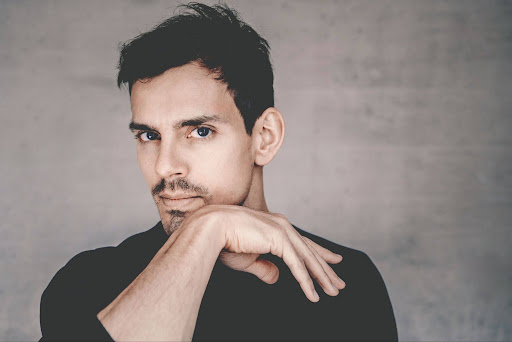
© Andrej Grilc
Article
 IDAGIO
 Austrian pianist Aaron Pilsan just achieved a lifelong dream: releasing the complete Chopin Études. Following his acclaimed recordings of Bach, Pilsan brings a distinct architectural clarity to Chopin's famously demanding works, revealing the complex inner voices often hidden beneath pure virtuosity.
In this conversation, the pianist discusses how Bach reshaped his understanding of Romantic music, the parallels between long-distance running and musical stamina, and the very human moments of frustration that arise when chasing perfection.
You once described recording the Chopin Études as a dream. Now that it has happened, does it feel the way you imagined it would?
Yes, absolutely. It felt amazing to be in the studio with such an incredible team. I had prepared for this recording very diligently and really tried to foresee as many of the possible parameters as I could.
I studied Chopin’s interpretations and his teachings, and I worked on the technical aspects with great colleagues and professors. I also prepared my exercise routine and my diet so that I could be in the best possible shape for the recording. I made sure to rest well during those days and carefully structured the recording sessions themselves.
So I really feel that we were able to make the most out of the sessions and give the music our full attention.
Of course, as an artist, you always find things that you could improve. That’s part of being an artist. You’re always searching for the ultimate truth, and perfection doesn’t really exist. But with this particular recording, I truly feel that I fulfilled the dream I had imagined for so many years.
What surprised you most when you started recording the complete Études?
What surprised me most was that many of the Études actually felt more difficult in the recording than they did in practice, and sometimes it was the other way around. So I couldn’t really tell in advance what would happen when I played them in the studio.
I was also fascinated by how different the process was when playing through the entire cycle compared to working on one single piece. I always work best when I play through whole pieces, because it frees my mind. If I try to be flawless in a single take, it actually makes me tense and takes away the freedom that I want to have in the music.
For me, the goal was to become poetic and tell a story through the interpretation. That’s what we were able to achieve by mainly playing through the cycle and then going back and re-practicing the parts I had missed or wasn’t happy with in the previous takes. This approach allowed me to stay much more connected to the overall musical flow rather than becoming too focused on individual details.
Was there a moment during the recording when something went wrong, changed unexpectedly or forced you to rethink your approach?
Yes. (laughs) For example, in Étude Op. 10 No. 7, I became so frustrated with the last two bars that I ended up practicing just those two bars for more than half an hour. I was cursing, jumping around, and completely losing my patience over these two little bars.
And then, when I listened back to the takes myself, I could almost relive the whole experience. (laughs) It was actually really hilarious.
It was a good reminder that even after all the preparation, there are always these little moments where something just refuses to work the way you want it to.
You first became obsessed with Bach at eight, playing his music for hours in your family’s basement. What was it about Bach that captivated you so completely at that age?
Bach’s music is the perfect mixture of emotional expression, spiritual experience, and intellectual challenge. I think that’s what captivated me so completely, even at such a young age. There is always something deeply emotional in the music, but at the same time, there is so much to discover intellectually. You can keep going deeper and never really reach the end of it.
And in many ways, I think Chopin felt the same way about Bach. Chopin was the first editor of the Well-Tempered Clavier, and he used to practice Bach’s music before his own performances. He also recommended studying Bach to his own students.
So for me, Bach has always represented this incredible combination of depth, spirituality, and craftsmanship. It’s music that challenges you intellectually while also speaking to something much deeper emotionally.
You’ve said that Bach helped you hear the inner voices in Chopin. Is there an Étude where that changed the way you play it?
There are many examples. For instance, Op. 25 No. 7, where the melody is in the left hand. To really express all of the polyphonic finesse in this Étude, I think the experience of practicing Bach is essential.
There are many more examples, just to name a few: Op. 25 No. 5 and No. 11, as well as Op. 10 No. 8. But really, it applies to almost every single Étude. The inner structure is often much more refined and complex than what you usually hear in recordings.
That’s one of the things Bach has taught me to listen for. Not just the obvious melody, but all the voices and layers happening underneath it, because they are what give the music its depth and character.
After spending so much time with Chopin, has anything changed about the way you play?
Very much so. I feel that working so intensively with Chopin has changed several aspects of my playing. In particular, I’ve developed a much deeper awareness of wrist movements and a greater sense of inner freedom when working with time.
At the same time, the process has also strengthened my pure athletic capabilities as a pianist. So I feel that the experience has influenced both the physical and musical sides of my playing.
Are there things outside of music that have been influencing the way you think about music lately?
I’ve been into long-distance running for a while now, and I see many parallels between it and practicing demanding piano literature. For example, the way you structure your training sessions, set goals, and how you train your mind to keep going, even when things become difficult.
That has been a very big influence on the way I approach my piano practice lately, particularly when it comes to developing my technique. It has taught me a lot about patience, consistency, and understanding that progress comes from structured training over time.
Now that you’ve finished the Études, what would you like to explore next?
I’m focusing a lot on my online academy, where I help hobby players and aspiring pianists master their dream pieces without pain and frustration. Chopin himself taught many amateurs, and I take a lot of inspiration from that. I really believe that we should all share music and, most importantly, strive to make music ourselves, regardless of whether we are professionals or not.
When it comes to recordings, I will be pursuing works by Beethoven. But I don’t want to spoil too much about what’s coming in the future.
Mark the date: Aaron Pilsan’s new album will be available on IDAGIO from 25 September 2026. In the meantime, discover the pre-released tracks from the album on IDAGIO.