Guest Article
 Arisa Iida
— Evergreen Symphony Orchestra, Jaap van Zweden and Eric Lu Open New Horizons
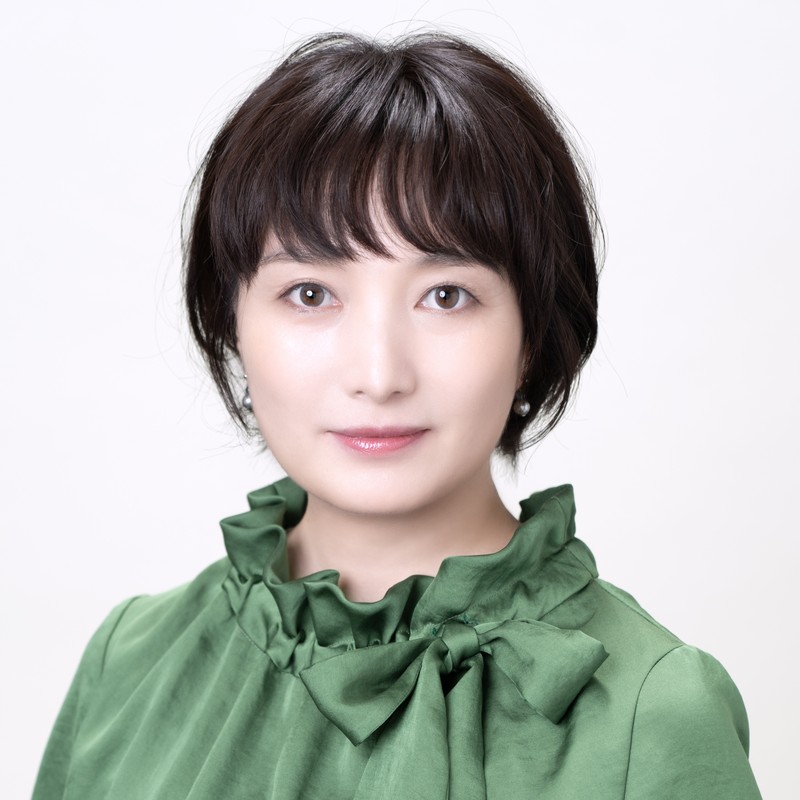
Arisa Iida (Classical Music Facilitator @ Podcast "Otona no Ongaku Zanmai")
Now and then, an orchestra arrives at a "moment of trying to change." Experiencing the sound of an orchestra steeped in history and tradition is wonderful; but to be present as the players of a young orchestra begin to answer one another, their separate notes coalescing into a single sound carried by one shared will — that process, too, is one of the true joys of orchestral listening.
Taiwan's Evergreen Symphony Orchestra (ESO) is right now in the midst of just such a phase.
The orchestra traces its origins to 2001, when the Chang Yung-fa Foundation — established by the founder of the Evergreen Group, renowned for maritime shipping and aviation — brought together some twenty musicians. By the following year, 2002, the ensemble had expanded into a full symphony orchestra of over eighty players. It remains the only professional orchestra in Taiwan overseen by a private foundation, and one of but a few of its kind internationally.
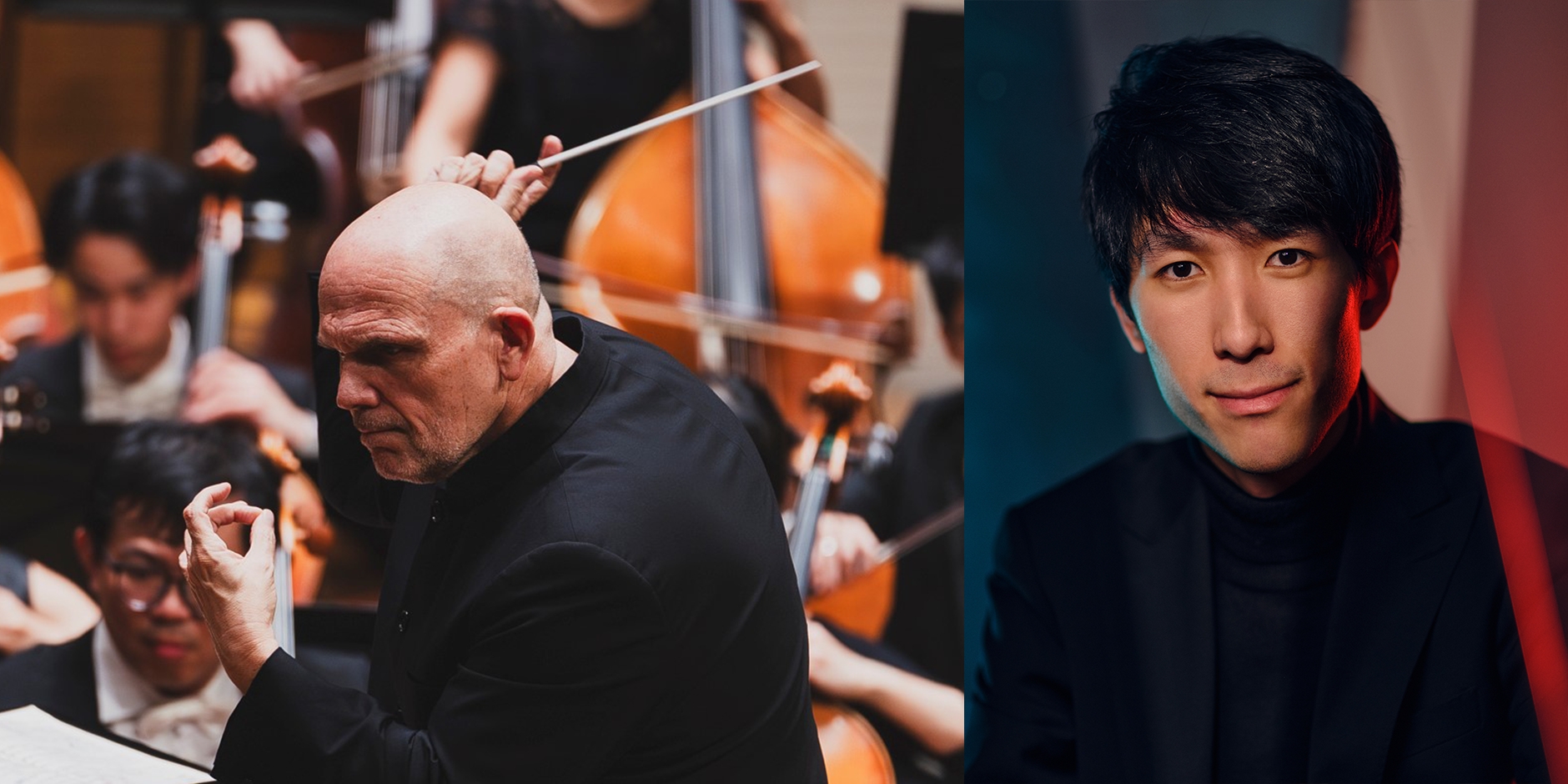
Under a mandate that is rooted in Taiwan and open to the world, the ESO has nurtured local talent while embarking on overseas tours. Recently, its journey reached a new turning point: in January 2025, the ESO welcomed Jaap van Zweden as its Artist-in-Residence. Welcoming the conductor who has led the New York Philharmonic, the Hong Kong Philharmonic and the Dallas Symphony Orchestra, among others, serves a purpose far beyond glamorous star-studded collaborations. The orchestra set clear objectives — further elevating its performance standards and fostering young Taiwanese musicians — with van Zweden himself actively involved in auditions and educational activities.
Thus the orchestra coming to Japan on this tour is not so much an orchestra presenting a finished portrait as a collective still polishing its sound, with world-class standards in view.
Van Zweden brings exceptional credentials to this kind of work. He led the Dallas Symphony Orchestra for a decade (2008–2018) and served as Music Director of the Hong Kong Philharmonic for twelve seasons, elevating the latter into an ensemble of international renown. The ESO introduces him as a "master builder," someone who envisions the future of an orchestra and shapes that vision into sound.
He also brings meticulous ensemble precision, powerful momentum, and a broad structural vision. How will these qualities manifest in a program featuring Ravel's La Valse and Shostakovich's Symphony No. 5? In La Valse, a gorgeous waltz decays into collapse; in Shostakovich's Fifth, an immense dynamic range holds tension and lyricism within a single span. In both, a conductor who tightens an ensemble in real time, as van Zweden does, is sure to deliver a vivid, compelling portrait of the ESO's sound today.
And joining them is pianist Eric Lu.
I had the opportunity to hear Eric Lu play live in Warsaw when he won the 19th International Chopin Piano Competition in 2025. In a competition environment where many pianists project dramatic virtuosity, his music took the opposite direction. Rather than projecting sound outward to assert his presence, he quietly stepped inside the work, inviting listeners into its world. His performance of the Piano Sonata No. 2 in B-flat minor, Op. 35, "Funeral March," in Stage II conveyed a taut music best described as "more poetry than motion, more thought than grand gesture."
Yet Lu's appeal cannot be captured simply by calling his playing "introspective."
This becomes even clearer when listening to his Schubert recordings. In the two sets of Impromptus, recorded in 2024, he does not offer eccentric interpretations; yet from the very first notes, he quietly reshapes the listener's existing conception of these pieces. Without pushing to the fore the kind of features that are easy to put into words — tempo, say, or the highlighting of inner voices — he still carries the listener to a distant, deeper place.
In his playing, one discovers a unique sense of time. Pauses between phrases hold a weight no metronome can measure; chords rich in light and shade, melodies that sing as if speaking, a pulse grounded in deep breath. These sounds join with the listener's own senses and memories, reaching what had long lain settled deep within.
To be sure, he is not a pianist who relies solely on quietude. Listening to his live recordings from the Chopin Competition reveals how he builds poetry through generous phrasing while imparting solid weight to dance rhythms when needed, even driving the final movement of the Sonata No. 3 with a vitality that seems to kick up from the ground. His vast tonal palette, refined sense of time, and underlying drive are essential facets of his artistry.
For this performance, he takes on Tchaikovsky's Piano Concerto No. 1. Its famous opening theme and brilliant virtuosity tend to seize the ear to the exclusion of all else, yet within the work there breathe a delicate song, a lyricism rich in light and shade, and a ceaseless exchange between piano and orchestra.
How will Lu — who treasures every nuance of tone and every passage of time between the notes — read and shape this majestic concerto? And how will the ESO, undergoing its own transformation under van Zweden, respond?
Beyond the pleasure of hearing famous masterpieces, to hear what can come into being only when these three meet — that is the anticipation this concert awakens.
One notable feature of the ESO's activity is its recordings that shine a light on symphonies. Under Prof. Gernot Schmalfuss — who led the orchestra as music director and chief conductor from 2007 to 2023, and is now its Conductor Laureate — the ESO recorded symphonies by Theodor von Schacht and Franz Lachner for the German label cpo.
Schacht (1748–1823) was a contemporary of Beethoven who served at the court of the Prince of Thurn and Taxis in Regensburg. Lachner (1803–1890) was a close friend of Schubert who later became a key figure in Munich's musical life. Rather than treating these works as mere historical curiosities, the ESO brings out the colors of the woodwinds and brass and the warmth of the melodies with lively energy. It meets unfamiliar works with the same sincerity, letting every musical idea sing with life. It is surely this accumulation that forms the bedrock of the ESO today.
Wagner: Die Walküre, WWV 86B, Act 3: Scene 1, Prelude (Ride of the Valkyries) — Hong Kong Philharmonic Orchestra, Stuart Skelton (tenor), Falk Struckmann (bass-baritone), Matthias Goerne (baritone), et al.
Tchaikovsky: Symphony No. 5 in E minor, Op. 64 — 1st Movement — Dallas Symphony Orchestra
OSAKAThe Symphony Hall
Wednesday, October 28, 2026 — 7:00 PM start (doors 6:00 PM)
S seats ¥10,000 / A seats (Sold Out) ¥5,000 (all seats reserved, tax included)
KYOTOKyoto Concert Hall, Main Hall
Friday, October 30, 2026 — 7:00 PM start (doors 6:00 PM)
S seats ¥10,000 / A seats (Sold Out) ¥5,000 (all seats reserved, tax included)